Automatic Fabric Drape Tester UI-TX10
Description
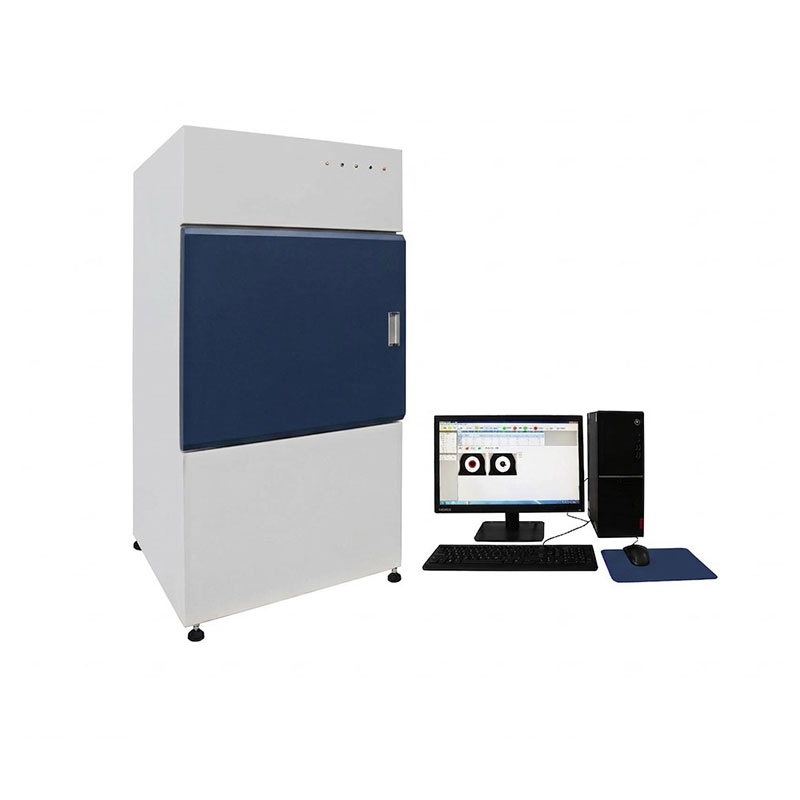
Cusick Drape Tester/Automatic Fabric Drape Tester is designed to test both the static and dynamic drape characteristics of various fabrics, accurately determining the drape coefficient, lively rate, corrugated surface, and aesthetic coefficient.
1. Automatic Fabric Drape Test Principle
Operating under full computer control, the tester evaluates drape performance by measuring the gravity-induced deformation of a horizontally placed annular fabric sample. During testing, a circular specimen is concentrically secured between two smaller horizontal discs, leaving the outer fabric ring unsupported so it naturally drapes into folds around the lower disc. The resulting shadow of the draped fabric is projected onto a sandblasted glass plate matching the dimensions of the unsupported area. A digital camera records this shadow profile and transmits the image to a computer, where dedicated software measures the shadow area and computes the drape coefficient relative to the original specimen size.
2. Unuo Cusick Drape Tester Key Features
- Automated Computerized Control: Utilizes microcomputer control and CCD imaging technology to automatically process test images and data via full computer operation.
- Comprehensive Data Management: Supports statistical analysis, record storage, and the generation of various data outputs and charts.
- Optical Shadow Measurement: Adopts a non-contact photographic measurement approach to replace conventional mass-weighing methods.
- High-Definition Sony Camera: Fitted with a Sony digital camera to capture clear, high-resolution shadow images.
International Standard Compliance: Built to meet BS testing standards as well as other relevant international standards. - High Accuracy & Easy Operation: Delivers greater measurement precision and simpler operation compared to traditional testing methods.
- Dynamic Wear Simulation: Capable of performing dynamic tests to more realistically reflect how fabrics behave during actual wear.
3. Fabric Drape Test Method
BS5058, FZ/T01045
4. Cusick Drape Tester Specification
| Model | UI-TX10 |
| Drape Coefficient Range | 0-100% |
| Accuracy | ≤±1.5% |
| Aesthetic Coefficient | 0-100% |
| Diameter of Specimen Clamp | Φ120mm |
| Dimension of Specimen(circular) | Φ240mm, 300mm, 360mm |
| Rotate Speed | 3-300±1r/min |
| Light Sourcing | DV 12V 100W for microscope |
| Power Supply | AC 220V 50/60HZ |
| Dimensions(L×W×H) | 600×570×1070mm |
| Weight | 60kg |
5. This Cusick Drape Tester Is Suitable for:
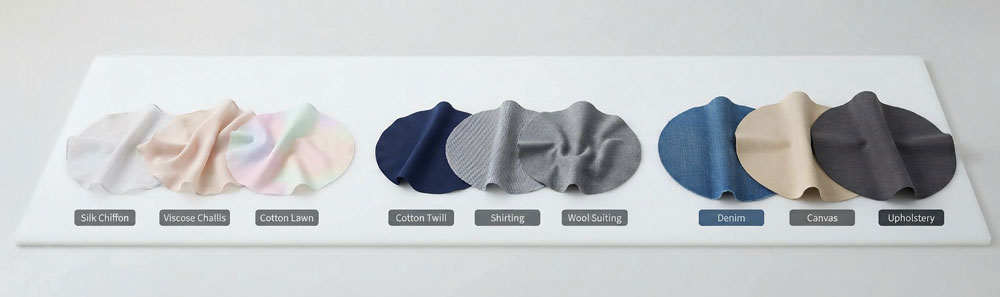
- Apparel & Fashion Textiles: Woven, knitted, silk, cotton, polyester, and blended garment fabrics.
- Home Textiles: Curtains, drapery, upholstery, and tablecloth fabrics.
- Quality Control & R&D: Textile mills, garment manufacturers, third-party testing laboratories, and textile research institutes.
6. FAQ
What is the difference between this UI-TX10 Automatic Drape Tester and a manual Cusick Drape Tester?
A traditional manual Cusick drape tester requires operators to manually trace the shadow outline onto paper rings, cut them out, and weigh them on an analytical balance to calculate the drape coefficient. The UI-TX10 automates this entire workflow using a built-in Sony CCD camera and PC software—it captures the projected shadow on the sandblasted glass, automatically calculates the shadow area and drape parameters, and generates test charts without manual tracing or weighing.
Which specimen diameter (240 mm, 300 mm, or 360 mm) should I choose for testing?
The choice depends on the stiffness of your fabric and the standard you follow (such as BS 5058 or FZ/T 01045):
-
300 mm: The standard default size used for most medium-weight apparel and general fabrics.
-
240 mm: Recommended for very limp, soft, or lightweight fabrics (like silk or chiffon) where a larger specimen would collapse too tightly around the lower disc.
-
360 mm: Used for stiff or heavy fabrics (such as denim, canvas, or coated textiles) that require a larger unsupported overhang to form measurable folds.
Does the machine include the computer, or can we install the software on our own PC?
-
Option A: A desktop or laptop computer is not included in the standard shipment to avoid shipping damage and local OS language issues. We provide the dedicated control software installation package and full setup guidance for your Windows PC.
-
Option B: The Cusick Drape Tester comes complete with a pre-configured computer and pre-installed testing software, ready for immediate operation upon setup.
Why is dynamic drape testing important alongside static testing?
Static testing measures how a fabric hangs while stationary, whereas dynamic testing rotates the specimen (adjustable from 3 to 300 r/min on the UI-TX10) to simulate airflow and body movement during actual wear. Measuring dynamic parameters like the lively rate gives apparel designers a much more accurate prediction of how a garment will flow and recover in motion.
Can the power supply be customized if our laboratory uses 110V instead of 220V?
The standard power configuration for the UI-TX10 automatic fabric drape tester is AC 220V, 50/60 Hz. If your facility operates on AC 110V (such as in North America or Japan), please inform us before ordering so we can configure a compatible voltage transformer or adapt the power input accordingly.