Ball Burst Strength Tester for Fabric UI-TX06
$50.00 – $5,000.00
Description
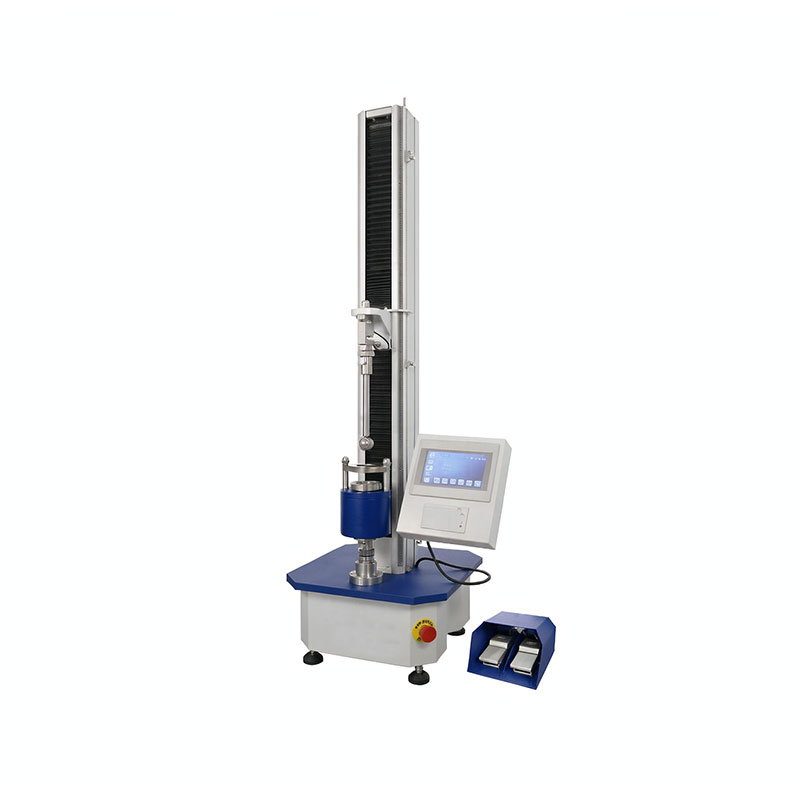
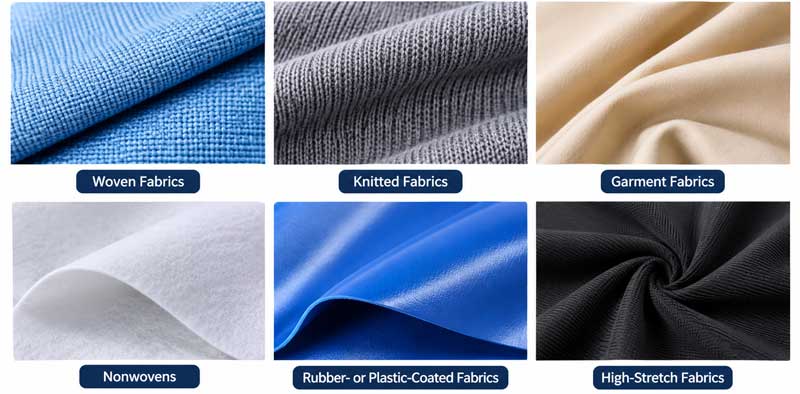
Ball Burst Strength Tester is a high-precision, multi-purpose testing machine supporting both Constant-Rate-of-Extension (CRE) and Constant-Rate-of-Traverse (CRT) test modes. It is designed to determine the ball bursting strength and distension of woven and knitted textiles, garment fabrics, nonwovens, rubber- or plastic-coated fabrics, and high-stretch fabrics.
Built on a versatile single-column frame with interchangeable grips, the UI-TX06 can also perform tensile, tear, peel, and seam slippage tests, making it an ideal all-in-one solution for textile mills, garment manufacturers, and third-party testing laboratories.
1. Ball Burst Strength Test Principle
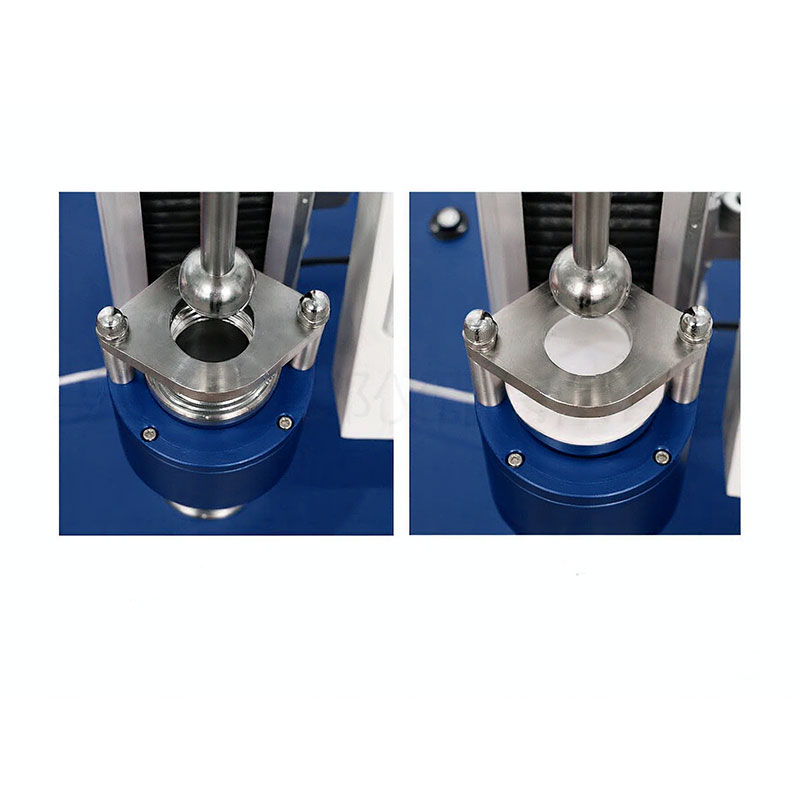
The ball burst test is performed on a CRE/CRT tensile strength testing machine equipped with a specialized ball burst fixture. A conditioned fabric specimen is securely clamped in the lower ring clamp without tension. The moving crosshead—fitted with an upper polished steel ball plunger—moves down vertically onto the specimen at a specified constant speed (e.g., 305 ± 13 mm/min per ASTM D3787/D6797, 300 ± 10 mm/min per GB/T 19976, or 100 mm/min per ISO 9073-5) until the sample ruptures. The peak force required to burst the specimen is recorded as the ball burst strength.
2. UNUO Ball Burst Strength Tester Key Features
2.1 Dual Operation Mode: Equipped with an intuitive color touch screen controller for standalone operation and a built-in thermal printer for instant test result printouts.
2.2 PC Software Connectivity: Supports connection to a computer via dedicated analysis software for real-time force-displacement curve plotting, statistical analysis (Max, Min, Avg, CV%), and PDF/Excel report generation.
2.3 High-Precision AC Servo Drive: Powered by a high-grade AC servo motor and precision ball screw, ensuring smooth, low-noise movement and accurate speed control across a wide range (0.1–1000 mm/min).
2.4 Multi-Standard Versatility: Ball burst strength test grip can be customized. Easily accommodates different steel ball diameters (Φ20 mm, Φ25 mm, Φ25.4 mm, Φ38 mm) and ring clamps, as well as optional tensile, tearing, and seam slippage grips.
2.5 Comprehensive Safety Protection: Features mechanical limit switches, overload auto-stop protection, and emergency stop button for operator and load cell safety.
2.6 Ball Burst Test grip: Pneumatic and maunal, 2 types are available for choice.
3. Ball Burst Strength Tester Specification
| Model | UI-TX06 |
| Test Principle | CRE (Constant Rate of Extension) / CRT (Constant Rate of Traverse) |
| Control mode | Touch screen control+Built-in Thermal Printer (PC Software Supported) |
| Capacity | 500N, 2500N, 5000N (can be customized) |
| Test Range | 1%~95% of machine capacity |
| Test Accuracy | ≤0.2%F.S |
| Speed | 0.1~1000mm/min or 0.1-500mm/min |
| Standard Ball & Clamp |
1. Manually 2. Pneumatic 3. Size can be customized. Φ25.4 mm steel ball & Φ44.45 mm ring clamp (ASTM/ISO); Φ25 mm / Φ38 mm optional (GB/FZ) |
| Stroke | 600mm (without grip) |
| Power supply | 1∮AC 220V | 110V 50/60HZ 3A |
| Standards | GB/T3923.1/2,GB/T3917.1/2/3/4/5,GB/T19976,GB/T 19976,FZ/T01030,FZ/T 60019,ISO13934.1,ISO13935.1,ISO9073.3/4,ASTM D5035,ASTM D2261,ASTM D 3787,ASTM D6796 |
| Warm tip: Different test standards require specific steel ball diameters, ring clamp dimensions, and load cell capacities. Please confirm your target test standards with our sales engineer for an accurate configuration and detailed quotation. | |
4. Applicable Standards – Ball Burst Strength Standards:
- ASTM D3787: Standard Test Method for Bursting Strength of Textiles—Constant-Rate-of-Traverse (CRT) Ball Burst Test
- ASTM D6797: Standard Test Method for Bursting Strength of Fabrics—Constant-Rate-of-Extension (CRE) Ball Burst Test
- ASTM D3783: Standard Test Method for Bursting Strength of High-Stretch Fabrics—Ball Burst Test
- ISO 3303-1 / EN 12332-1: Rubber- or Plastics-Coated Fabrics—Determination of Bursting Strength—Part 1: Steel-Ball Method
- ISO 9073-5 / EN ISO 9073-5: Nonwovens—Test Methods—Part 5: Determination of Resistance to Mechanical Penetration (Ball Burst Method)
- GB/T 19976-2005: Textiles—Determination of Bursting Strength—Ball Method
- GB/T 8878: Knitted Cotton Underwear (Ball Burst Test)
- GB/T 24218.5-2016: Textiles—Test Methods for Nonwovens—Part 5: Determination of Resistance to Mechanical Penetration (Ball Burst Method)
- FZ/T 01030: Textiles—Knitted and Elastic Woven Fabrics—Determination of Bursting Strength and Distension at Seams—Ball Burst Method
- FZ/T 60019: Nonwovens—Determination of Bursting Strength—Ball Method
- JIS L 1018: Testing Methods for Knitted Fabrics—Ball BurstAS 2001.2.19: Textiles—Physical Tests—Method 2.19: Determination of Bursting Strength (Ball Burst)
- CAN/CGSB-4.2 No.11.2: Textile Test Methods—Ball Burst (Ball Method)
Extended Standards (with Optional Grips):
- Tensile Strength: ISO 13934-1, ASTM D5035, GB/T 3923.1/2
- Tear Strength: ISO 9073-4, ASTM D2261, GB/T 3917.1/2/3/4/5
- Seam Slippage: ISO 13935-1
5. Ball Burst Strength Test Applicable Materials
6. FAQ
Can the UI-TX06 be operated without a computer?
Yes. The UI-TX06 ball burst strength tester features an integrated color touch screen controller and a built-in thermal printer, allowing operators to set parameters, run tests, view peak force values, and print test slips directly on the machine without needing a PC. When deeper curve analysis or PDF/Excel reporting is required, simply connect it to a Windows PC via the included software.
What is the difference between a Ball Burst Strength Tester and a Hydraulic/Pneumatic Diaphragm Bursting Tester?
Ball Burst Strength Tester (UI-TX06) uses a rigid polished steel ball driven at a constant speed to push through a clamped fabric specimen, measuring peak force in Newtons (N) or lbf—ideal for high-stretch knits, activewear, and nonwovens (e.g., ASTM D3787, ASTM D6797). A Hydraulic/Pneumatic Bursting Tester (e.g., ASTM D3786, ISO 13938-1) uses fluid or air pressure behind an elastic rubber diaphragm to expand the sample until rupture, measuring pressure in kPa or psi.
What is the difference between ASTM D3787 and ASTM D6797, and does UI-TX06 meet both?
Both standards use the exact same fixture dimensions—a 25.4 mm (1 in.) steel ball and a 44.45 mm (1.75 in.) internal diameter ring clamp—at a speed of 305 ± 13 mm/min. ASTM D3787 specifies a Constant-Rate-of-Traverse (CRT) pendulum tester, while ASTM D6797 specifies a modern Constant-Rate-of-Extension (CRE) tester. With its high-accuracy AC servo drive, the UI-TX06 fully satisfies the test requirements for both standards.
How do I choose between 500 N, 2500 N, and 5000 N load cell capacities?
This can be customized. We can cusotmize the burst strength tester with required test capacity and equip with right load cell. Since the effective testing range is 1% to 95% of the load cell capacity:
500 N is recommended for lightweight nonwovens, delicate lace, and thin knitted underwear fabrics.
2500 N is the most popular all-round choice for standard apparel knits, woven fabrics, and medium-weight nonwovens.
5000 N is ideal for heavy-duty industrial textiles, geotextiles, and thick rubber- or plastic-coated fabrics.
Can I add tensile and tear grips to the UI-TX06 later?
Yes. The UI-TX06 has a 600 mm effective stroke and modular grip mounts. You can order additional pneumatic or manual grips for strip/grab tensile tests (ISO 13934-1, ASTM D5035), tongue/trapezoid tear tests (ISO 9073-4, ASTM D2261), or seam slippage (ISO 13935-1) either with your initial order or at any time in the future.
Does the machine come with a calibration certificate?
Yes, every UI-TX06 undergoes strict factory calibration before shipment and includes a factory calibration certificate. If your quality audit requires an ISO 17025 accredited third-party calibration certificate, we can arrange this prior to dispatch.
Related products
-
DIN Abrasion Tester UI-FT24
$1,500.00 – $3,200.00