
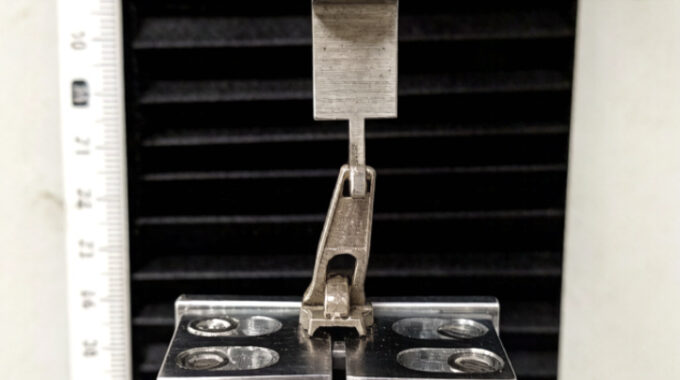
ASTM D 2061 Zipper Strength Test by Tensile Tester
Zipper strength testing is an essential method for evaluating zipper quality. It involves stretching the zipper or its specific components—such as the tape, elements (teeth), or slider—at a specified speed until the tested part breaks. By simulating the load-bearing and pulling forces experienced during daily use, this strength test determines the breaking force, evaluates overall quality, and serves as a key standard for product acceptance and delivery.
ASTM D2061 is frequently used as the quality standard in commercial zipper transactions and one of zipper strength test methods. A constant-rate-of-extension (CRE) tensile tester can perform most of the test methods required by this standard. By utilizing different grips and fixtures, the tensile machine can evaluate the strength of various zipper components. For more detailed information about this zipper strength tester, please refer to UI-1100, UI-1300
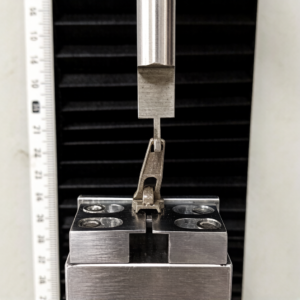
As ASTM D2061 is widely adopted as the benchmark for zipper quality, in the following, we will introduce the specific test methods covered under this standard:
1. Strength of Chains And Elements
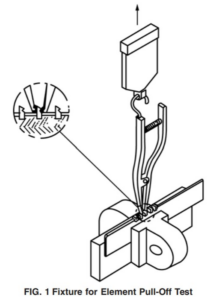
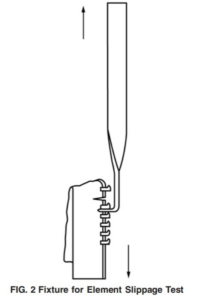
Strength of chains and elements includes crosswise strength, zipper teeth pull off, and zipper teeth slippage.
Zipper chain crosswise strength is to measure zipper chain ability to withstand lateral stress. To perform the crosswise strength test, the chain is clamping by pneumatic grip or manual grip 25.4mm on the tensile strength tester, apply a speed 305mm±10mm/min until the failure is detected. This test is the most basic test for zipper, especially for zipper used in bag, luggage, trousers or some items which needs to bear some loads.
Zipper teeth pull off is to test a single teeth’s pull resistance ability on the chain by using an increasing load until it is pulled off.
2. Holding Strengths of Stops
Holding strength of stops contains five different methods for zipper stop holding strength test. The holding strengths of stops test simulate the zipper performance in real use.
2.1 Top stop holding
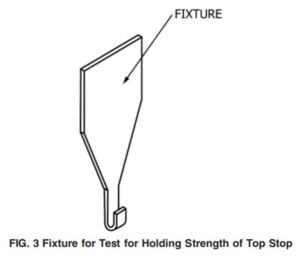
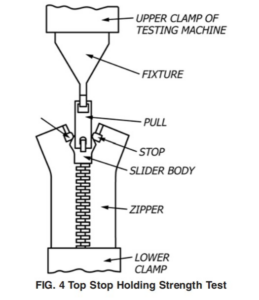
Top stop attachment strength test aims to evaluate the top stop ability to stop the slider to go beyond the zipper chain. While hooking the pull on the fixture, the test uses the tensile tester to apply an increasing load to the pull until the failure is detected.
2.2 Bottom stop holding, slider
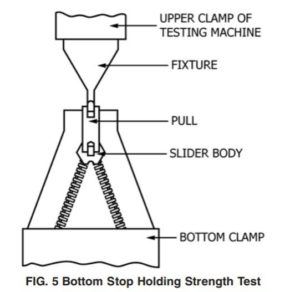
Bottom stop holding is to test bottom stop attachment resistance by applying an increasing load to the slider longitudinally to the bottom stop.
2.3 Bottom stop holding, crosswise
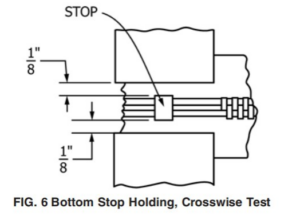
Bottom stop holding crosswise is to test zipper bottom stop in crosswise / lateral direction by clamping the chains and pull chains with an creasing load until tape breaks or other failure is detected.
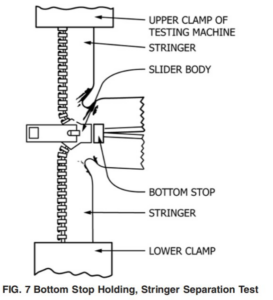
2.4 Bottom stop holding, stringer separation
Bottom stop holding, stringer separation test is to evaluate the zipper bottom stop to resist failure by tape bead rupture, element separation from bead or bottom stop displacement dur the strength applied through stringers.
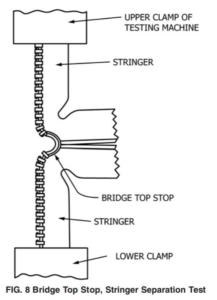
2.5 Bridge top stop, stringer separation
Bridge top stop, stringer separation test is to evaluate the holding strength by applying an increasing load and check if the slider will have displacement during the test or not.
3. Holding Strength of Separable Units
.The strength of separable units has 3 different test methods, pull- off for separable pin, fixed retainer and separating unit crosswise. All this 3 tests use UTM for the strength test by adopting different clamps.
4. Resistance to Angular Pull-Off Slider Pull
This test is to determine the pull-off strength of pull from a pull-and-slider zipper. The slider would be placed on the upper clamp horizontally, and the pull is pulled verically downward.
5. Resistance to Angular Pull-off of Slider Pull
This test is to determine the pull-off strength of pull from a pull-and-slider zipper, the pull is pulled at a 135 degree.
6. Holding Strength of Slider Lock
This test is used to evaluate the locking strength of a slider by pulling the stringer od the zipper.