Bally Flexometer UI-FT17A
Description
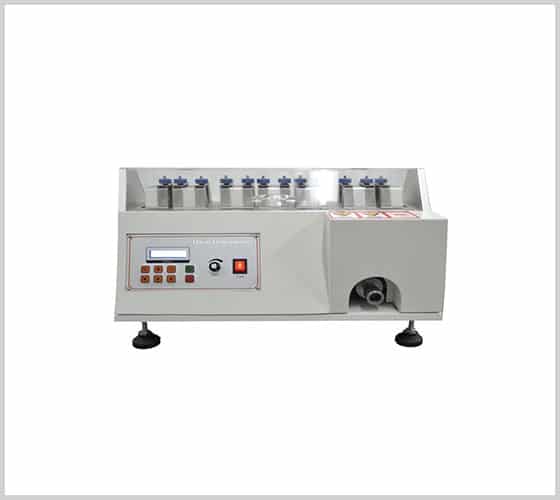
Bally Flexometer is used to determine leather flex resistance by flexing leather at a certain angle and speed in wet or dry conditions. The flexometer is suitable for testing all kinds of flexible leather with a thickness below 3 mm.
Unuo Instruments is a manufacturer and supplier of leather testing equipment. Contact us today for Bally Leather Flexing Tester price & more details.
1. Unuo Bally Flexometer Features
- Flex sample in dry or wet;
- Environment control available; Temperature ranges: -20℃, -40℃, -60℃
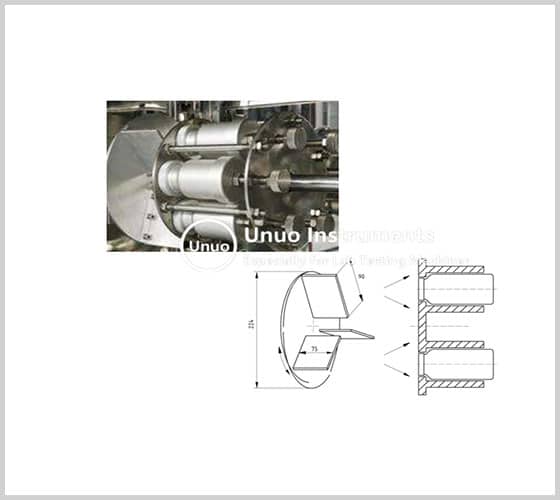
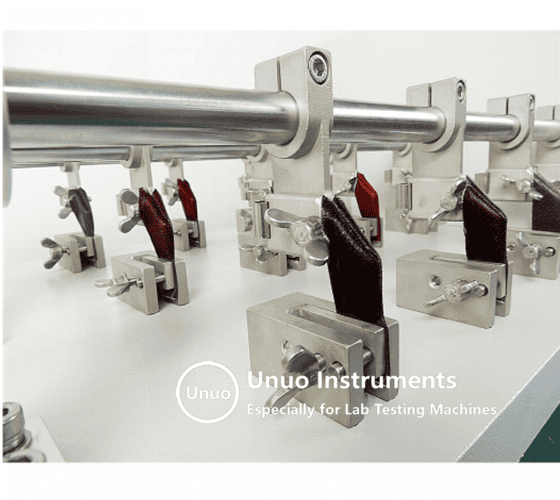
- 2 kinds of clamping grips for choice as required by different test standards;
- This flexometer out frame is made of iron, surface treatment with baked paint finish;
- Leather flex test grips are made of stainless steel and are fixed and released by butterfly nuts, allowing easy operation.
- Two control methods are available: button control and touchscreen control, designed to suit different budgets and user preferences.
- Languages: The machine supports Chinese and English.
- Driven by a servo motor, ensuring constant running speed, low noise, and high torque.
- Counting system: The machine features an up-counting system with memory function. In case of accidental power shutdown, the tested cycle data is retained.
- Auto-stop: The machine automatically stops once the preset test cycles are reached.
- Jog function: Unuo brand bally leather flexing tester can be jogged via the control panel or handwheel adjustment. After stopping, it automatically returns to the zero position.
2. Bally Leather Flexing Test Principle
A rectangle 70*45mm specimen is folded with its surface inward and fixed into the flexometer upper clamp. The opposite size of the sample would be fixed in the lower clamp with sample surface outward.
The upper clamp acts as the movable component, while the lower clamp remains stationary. The leather flexing tester will flex the sample with a certain frequency (100±5 ) cycles/min at a angle (22.5±0.5) degree to simulate bending in real life.
The flex test needs to be checked periodically. After the pre-set cycles is reached, check sample to see if there is any damage or change like color changing, cracking, adhension, powdering.
3. Bally Flexometer Specification
| Model | UI-FT17A-1 | UI-FT17A-2 |
| Grips | 12 pcs | 24pcs |
| Flexing angle | 22.5±0.5° | |
| Speed | 100±5 cpm | |
| Power supply | 1∮AC 220V 50/60HZ 3A | |
| Bally Flex Test Method Standards (Grips vary according to standards) |
GB/T 20991,SATRA TM55,DIN 53351,ISO 5402,BS 344-1,JIS K6545,QB/T 2714-05,EN 13512,ISO 17694,GB/T 3903.41,IULTCS/IUP 20-1,ISO 17694,EN 13512 ,EN344-1 section 5.13.1.3 and annex C,EN ISO 20344 section 6.6.2.8,AS/NZS 2210.2 section 6.6.2.8,ASTM D 6182 | |
4. Optional Accessories
- Cutting die 70*45mm
- Pneumatic sample press
- Vaccum desiccator
- Glass dishes
- Mandrel
- Metal clip
- 25X Stereo microscope
5. How to prepare leather sample for bally flex test?
Bally flex test sample preparation has 2 methods, dry and wet. Use the cutting tool to cut mini 4 pcs of specimens. 2 pcs with the long edge parallel to the backbone and two with the long edge perpendicular to the backbone.
For dry flexing test, condition samples in a temperature of 23.0℃, and a relative humidity of 50.0% for 24 hours before testing according to ISO 2419.
For wet flexing test, place the sample in a glass dish which is filled with distilled water mini depth 10mm, and put the dish inside of the desiccator and reduce the pressure to below 4kPa for 2 min.
6. Bally Flexing Test Procedure
- Open the uppder and lower grip for at least twice the sample thickness. Unuo bally flexometer’s grip is fixed/loosed by butterfly nut, which is easy for operation
- Make sure the upper and lower grip is parallel to each other. Using Unuo Bally flexometer, Operator can use the handwheel or turn on the machine to use jog function, or can run machine for a few cycles, machine will auto-stop at the parallel position.
- Fold the sample in half, with the grain side facing inward. Hold it in the upper fixture, making sure it is securely clamped to prevent it from falling off during the test. Then, turn the sample outward and pull it down. When the two sides at the lower end of the sample are parallel, hold it in the lower fixture.
- Draw the free corners outward and downward around the upper clamp. Place the free end into the opened lower clamp.
- Check sample status at interval
- Dry Flex: Up to 250,000 cycles (500; 1000; 5000;10000; 20000; 25000; 50000; 100000; 150000; 200000; 250000.)
- Wet Flex: Up to 50,000 cycles (500; 1000; 2500; 10000; 20000; 25000; 50000)
7. Know more about Bally Flex Test
- Bally Flexometer Different Types Test Grip
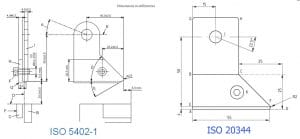
Bally Flexometer standard includes ISO 5402-1, ISO 20344, ASTM D6182, IULTCS/IUP 20-1, EN 344 and SATRA leather standard SATRA TM55. Although these leather flexing test methods require the same flexing speed, they have different requirements for the test grip. Below is a comparison of ISO 20344 and ISO 5402-1.
Unuo Bally Leather Flexing Tester can be equipped with these 2 types of grip in one flexometer to save your cost!
- For leather flex resistance test method ISO 5402, part 1 is flexometer method – Bally Flex Tester; Part 2 is Vamp Flex Method – Vamp Flex Tester;
- Bally Leather Flexing Tester is a pre-flexing machine before Water Vapour Permeability(WVP) test as mentioned in ISO 20344 for footwear testing.
- To know flexing resistance of leather at low temperature, Bally Flexing Tester can be made with temperature & humidity control. This cold Bally flexing tester can be added with other test grips like vamp flex tester as an integrated model to save your cost. As a leather testing machine, bally flex tester is commonly used to check the properties of leather and footwear /shoe upper materials.
* Contact us for an Update about ISO 5402-1 VERSION 2022
8. What Material Can Be Tested With A Flexometer?
This flexing tester is suitable for testing leather, shoemaking, luggage, furniture, composites, vinyl, and surface finishes.